Professional Guide to buy mens winter jackets and Down Gear
Selecting the right thermal protection for sub-zero environments requires a balance between insulation efficiency, moisture management, and mobility. For procurement managers and outdoor gear distributors, sourcing a reliable hooded down jacket involves evaluating the synergy between shell materials and filling power to ensure end-users remain warm without excessive bulk. The ability to maintain core body temperature in harsh winters is not just a matter of comfort, but a critical safety requirement for those working in outdoor industrial or extreme sporting environments.
This analysis examines the technical construction of professional-grade winter apparel, focusing on high-density nylon shells and down insulation systems. By integrating water-repellent finishes with ergonomic features like elasticated hems and secure storage, these garments address the specific challenges of heat loss and moisture penetration. Whether you are looking to buy mens winter jackets for a corporate fleet or a retail line, understanding the impact of a "Classic Fit" on layering capability is essential for maximizing the utility of the garment in real-world conditions.

Technical Architecture of High-Performance Down Insulation and Nylon Shells
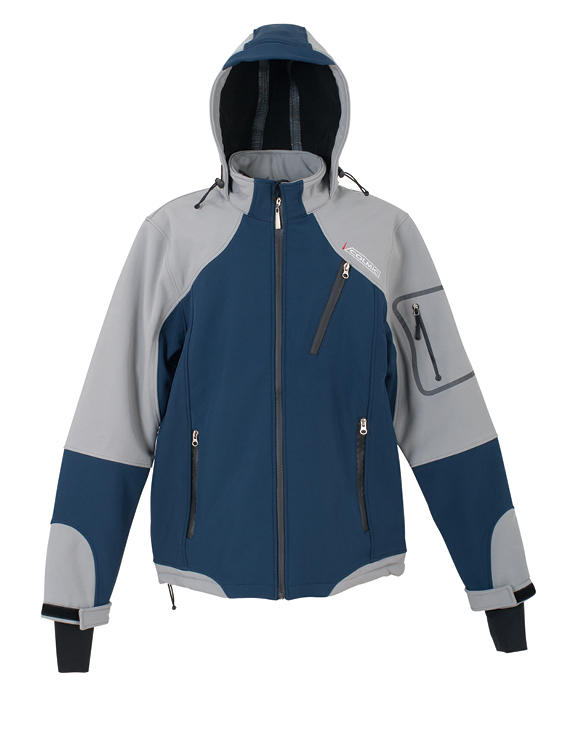
The efficacy of a winter jacket is primarily determined by its ability to trap air and repel external elements. The professional-grade hooded down jacket utilizes a 100% nylon construction, chosen for its inherent strength-to-weight ratio and versatility. Nylon provides a durable barrier that resists abrasions while remaining lightweight enough to prevent wearer fatigue during prolonged use in the field.
To combat the risks of dampness, which can compromise the loft and thermal properties of down filling, the fabric is treated with a specialized water-repellent finish. This chemical treatment ensures that light rain or snow beads on the surface rather than penetrating the weave. When combined with sub-zero warmth down insulation, the garment creates a thermal envelope that minimizes convective heat loss, keeping the wearer warm even when external temperatures drop significantly.
Furthermore, the architectural focus on "heat leaks" is addressed through targeted design elements. Elasticated cuffs and a reinforced waist hem act as seals, preventing cold drafts from entering the jacket and warm air from escaping. This attention to detail is what separates industrial-grade outdoor wear from standard consumer fashion, ensuring that the thermal integrity of the jacket is maintained during active movement.

Ergonomic Design and Functional Utility for Harsh Winter Environments
Utility in extreme cold is defined by how a garment accommodates the user's needs without compromising its protective qualities. The integration of two secure zippered side hand pockets provides not only warmth for the extremities but also safe storage for essential tools or devices. An additional interior pocket is included for high-value items, ensuring they remain close to the body's heat source to prevent battery drain in cold weather.
A critical consideration for any professional garment is the "Classic Fit." Unlike slim-fit designs that restrict movement, the universal classic fit is engineered to accommodate mid-weight layers. This allows users to customize their warmth levels by adding fleece or thermal base layers underneath the jacket, making it adaptable to a wider range of temperature fluctuations throughout the winter season.
One of the most significant advantages of this specific down jacket is its packability. The garment can be compressed into one of its own hand pockets, transforming it into a compact insulation option that fits easily into a backpack or suitcase. This feature is indispensable for hikers, field engineers, and travelers who require high-loft warmth but have limited storage space during transit.
Procurement Guidelines for Professional-Grade Winter Outdoor Wear
When sourcing winter apparel at scale, buyers must look beyond the aesthetic and focus on the longevity of the materials and the reliability of the manufacturer. A key indicator of quality is the certification of the production facility; for instance, BSCI certification ensures that the manufacturing process adheres to international social and ethical standards, which is increasingly important for corporate social responsibility (CSR) compliance in Europe and the USA.
Buyers should evaluate the following criteria when selecting a supplier for winter jackets:
- Material Consistency: Ensure the nylon shell maintains a consistent denier and the water-repellent finish is applied uniformly across all batches.
- Customization Capability: The ability to adjust specifications for specific regional climates (e.g., higher fill power for Arctic regions) is a mark of a professional manufacturer.
- Maintenance Requirements: High-quality down requires specific care. The provision of clear washing instructions—such as using special down detergents and avoiding high-temperature drying—is essential for extending the product's lifecycle.
- Lead Time and Export Experience: A supplier with a proven track record of exporting to diverse markets like Russia and the Middle East is more likely to understand the logistics and quality standards required for global distribution.
Technical Comparison of Winter Insulation Options
| Feature | Down Insulation | Synthetic Filling | Cotton Padded | Wool Blend |
|---|---|---|---|---|
| Warmth-to-Weight | Excellent | Good | Moderate | Moderate |
| Packability | High | Moderate | Low | Low |
| Moisture Resistance | Low (Requires Shell) | High | Moderate | Moderate |
| Breathability | High | Moderate | Low | High |
| Durability | High (if cared for) | Very High | Moderate | High |
Quality Control and Manufacturing Standards in Textile Production
The production of high-end winter jackets is a complex process that involves precise stitching and rigorous quality checkpoints. At the manufacturing stage, the integrity of the baffles—the chambers that hold the down in place—is paramount. Improperly stitched baffles lead to "cold spots" where insulation migrates, leaving the wearer exposed to the elements. Professional manufacturers utilize advanced sewing techniques to ensure an even distribution of down throughout the garment.
Quality control also extends to the hardware. Zipper failure is a common point of failure in winter gear; therefore, using heavy-duty, cold-resistant zippers is a requirement for professional use. The interaction between the nylon shell and the water-repellent coating is tested to ensure that the finish does not peel or wear off prematurely, maintaining the jacket's hydrophobic properties over time.
For companies specializing in workwear and outdoor gear, the ability to integrate various technical fabrics—such as combining a waterproof nylon shell with a breathable lining—is what provides the competitive edge. This multidisciplinary approach to garment engineering ensures that the final product is not just a piece of clothing, but a piece of protective equipment.
Future Trends in Cold Weather Apparel and Sustainable Sourcing
The industry is currently shifting toward more sustainable and intelligent materials. We are seeing an increase in the demand for recycled nylon and ethically sourced down, as global brands face pressure to reduce their environmental footprint. The integration of these sustainable materials without sacrificing the thermal performance of the jacket is the next great challenge for textile engineers.
Moreover, the convergence of workwear and outdoor wear (often termed "gorpcore" in retail) is driving a demand for jackets that offer industrial-grade protection but with a classic, versatile fit. This trend means that the same jacket used by a field technician in Northern Europe may also be sought after by an urban consumer in North America, increasing the need for universal sizing and timeless design.
For the professional buyer, the focus is moving toward "lifecycle value." Rather than seeking the lowest initial cost, procurement strategies are now prioritizing durability, ease of maintenance, and the ability to customize garments for specific employee needs. This shift ensures that the investment in winter apparel yields long-term benefits in terms of employee health and operational efficiency.
Frequently Asked Questions on Professional Winter Jackets
What makes a nylon shell better than other materials for winter jackets?
Nylon is preferred for its high durability and lightweight nature. When treated with a water-repellent finish, it provides an effective barrier against wind and moisture while remaining breathable enough to prevent internal condensation.
How does the "Classic Fit" impact the warmth of the jacket?
A classic fit is designed to be universal, allowing the wearer to add mid-weight layers underneath. This layering capability is essential for maximizing warmth in extreme cold, as it creates multiple air pockets that trap body heat.
Can these down jackets be packed into a suitcase without damaging the insulation?
Yes, these jackets are specifically designed to be packable. They can be compressed into a hand pocket for easy transport. Once unpacked, lightly patting the jacket helps the down recover its loft and thermal efficiency.
What are the critical washing precautions for down-filled apparel?
Down should be washed separately using a special down detergent at temperatures below 86°F. You must avoid bleaching, wringing, or ironing, and the jacket should be dried naturally in a cool environment to maintain the filling's integrity.
Is it possible to customize the features of the hooded down jacket for corporate orders?
Yes, professional manufacturers like Shijiazhuang Dellee Ming Garments Co., Ltd. offer customization options to meet specific customer requirements, whether it be regarding material specifications, branding, or additional functional features.
How do elasticated cuffs and hems contribute to the overall warmth?
They serve as thermal seals that minimize the entry of cold air and the escape of warm air from the body's core, significantly reducing heat loss in wind-exposed or sub-zero environments.
Technical References and Industry Standards
- ISO Standards for Protective Clothing
- Textile World - Technical Fabric Innovations
- OSHA Guidelines for Cold Stress Protection
- BSCI Audit and Compliance Standards
Investing in professional winter outerwear requires a deep understanding of material science and ergonomic design. By prioritizing high-density nylon shells, genuine down insulation, and a manufacturer with certified quality standards, buyers can ensure superior protection against the harshest winter climates.
Related Outdoor and Workwear Solutions