Dear customers and friends:
THE BUYER'S GUIDE / SELECTION
Choosing a High Visibility Softshell Jacket: Application Fit and Specification Checks
Procurement teams sourcing high visibility workwear need to match jacket construction to the demands of each work environment. This guide explains the key selection criteria for a high visibility softshell jacket — including fabric construction, reflective tape design, and application suitability — using confirmed product specifications from Shijiazhuang Dellee Ming Garments Co., Ltd. to support well-informed purchasing decisions.

Fabric construction and comfort: softshell vs. woven-shell vs. knit brushed — match fabric type to the physical demands of the role and the climate of the deployment site.
Reflective tape type and placement: printed reflective tapes confirmed for DM120 and DM112; buyers must verify retroreflectivity against the applicable regional safety standard before bulk ordering.
Application environment and work role: logistics, infrastructure maintenance, construction, corporate safety uniform, and warm-weather compliance each map to different confirmed garment constructions.
Garment system compatibility: a softshell jacket can anchor a multi-layer PPE system alongside the confirmed hoody and T-shirt options available from the same supplier.
Why Jacket Construction Matters for Hi-Vis Workwear
High visibility workwear is a critical layer of personal protective equipment (PPE) across construction sites, road maintenance crews, logistics hubs, and field infrastructure teams. When evaluating a high visibility softshell jacket, buyers need to look beyond color and consider fabric composition, reflective tape technology, garment cut, and the environmental conditions the jacket must handle. Choosing the wrong construction can reduce worker safety, increase replacement frequency, or fail to meet the operational requirements of the job site.
This guide walks through the primary selection criteria and maps them to confirmed product specifications from Shijiazhuang Dellee Ming Garments Co., Ltd.
1. Fabric Construction and Comfort
The fabric used in a jacket determines how it behaves across temperature ranges, during physical activity, and over the garment's service life. Softshell materials balance stretch, wind resistance, and breathability — making them suitable for workers who move frequently or operate in variable outdoor conditions.
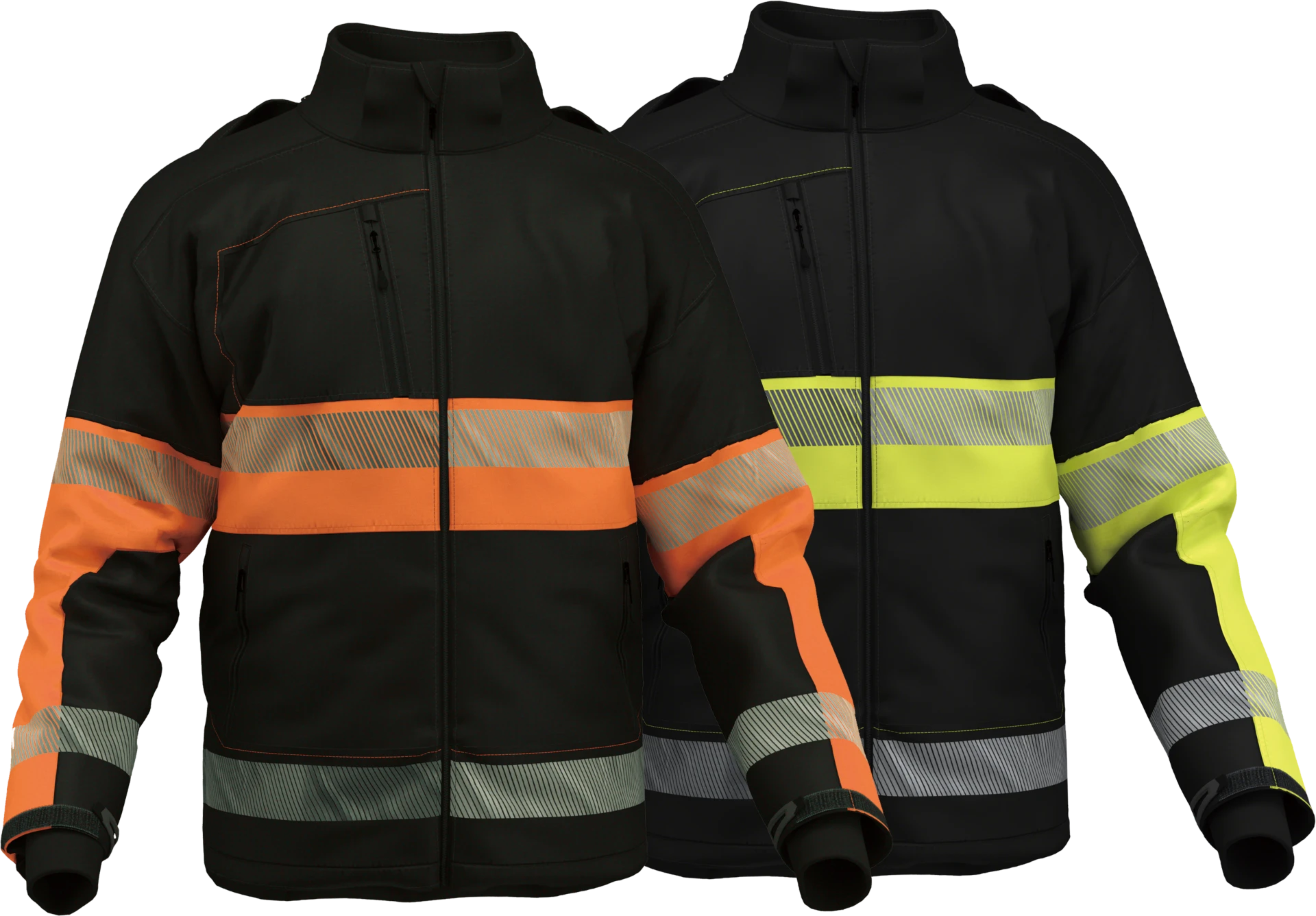
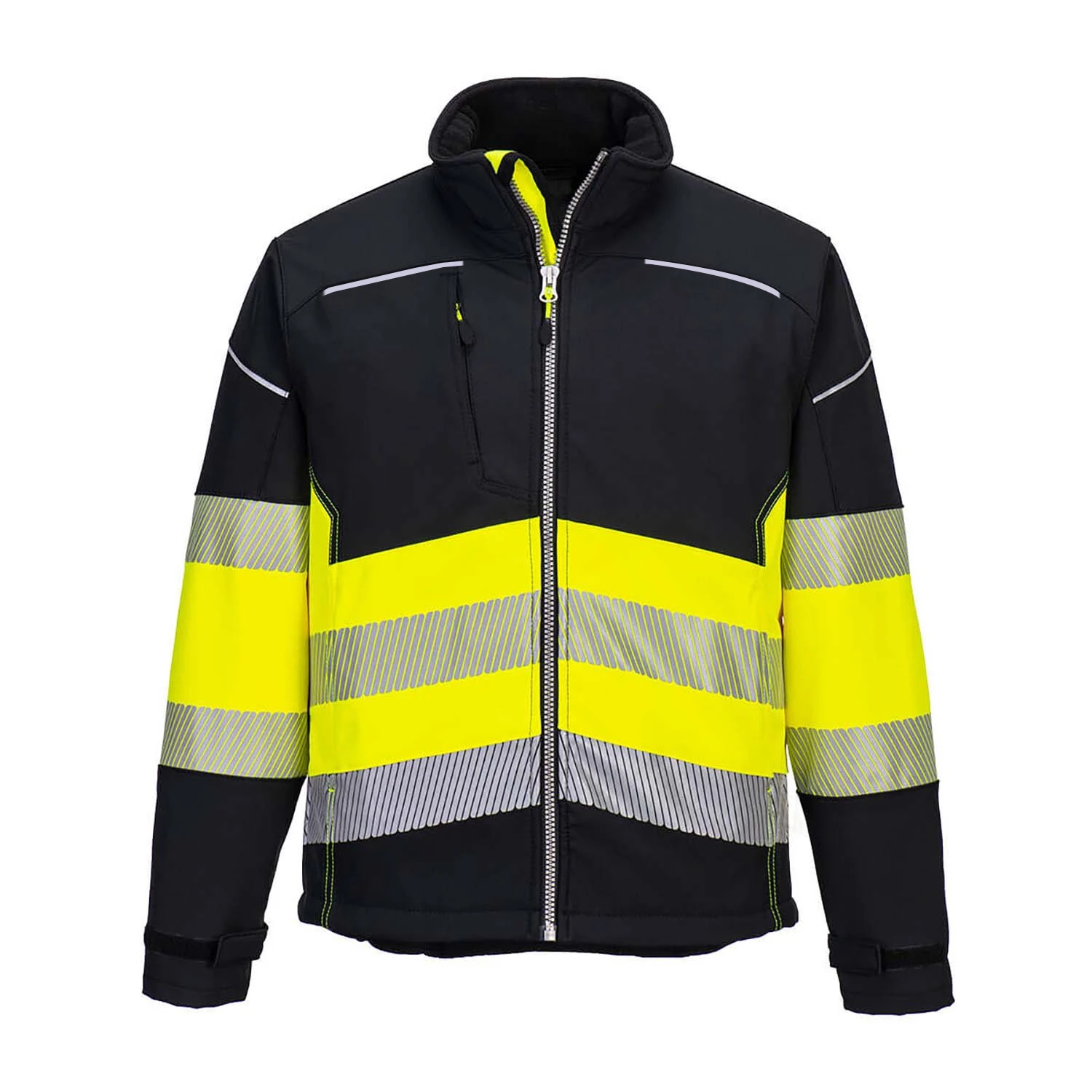
- DM120 (HIGH VISIBILITY SOFTSHEEL JAKCET): Softshell construction with printed reflective tapes. Well suited to logistics operations, infrastructure maintenance, and field service roles where workers change positions frequently.
- DM121 (HIGH VISIBILITY JACKET — Fabric Softshell): Also built on a softshell fabric platform, positioned for corporate safety uniforms and bulk industrial procurement. Supports scalable manufacturing for global PPE supply chains.
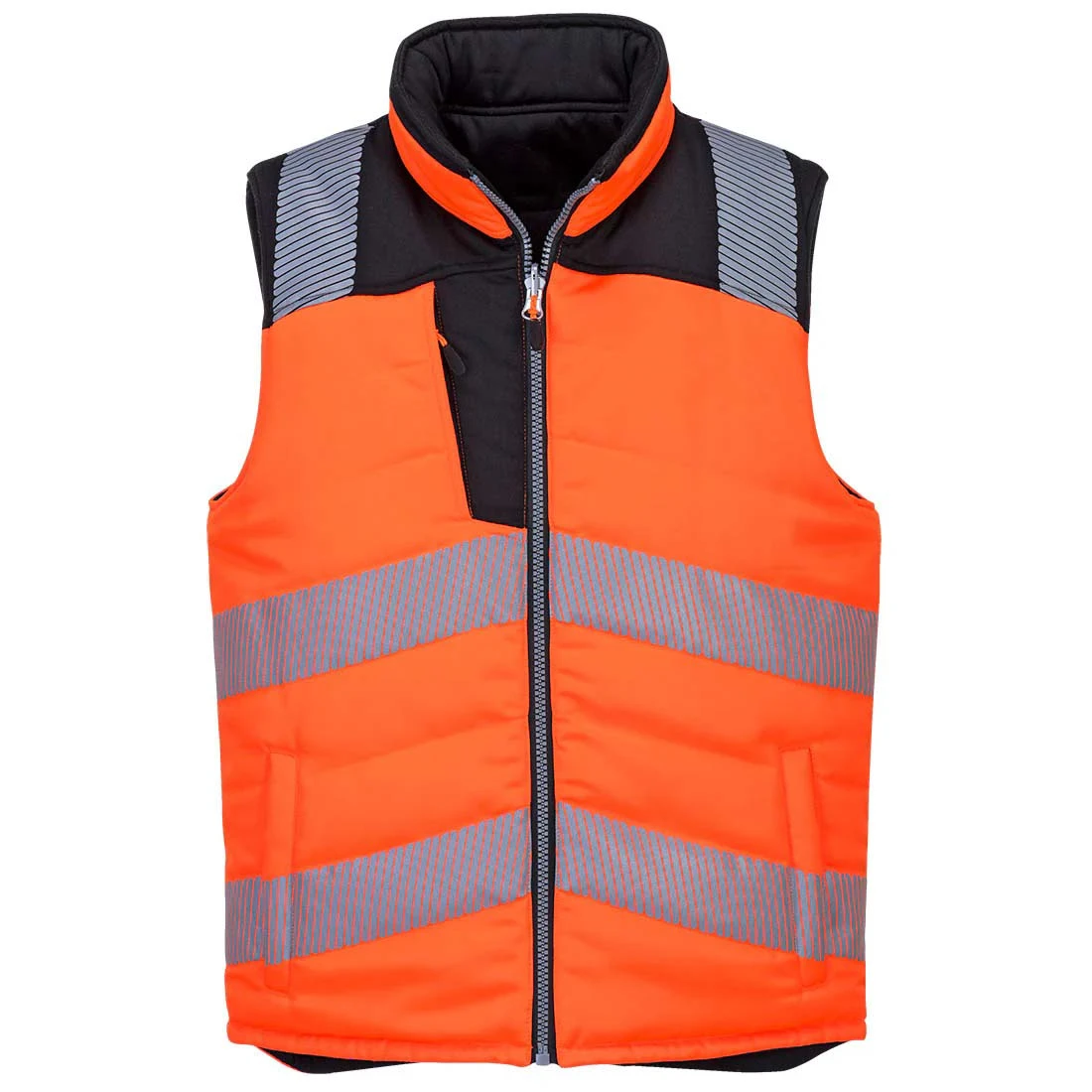
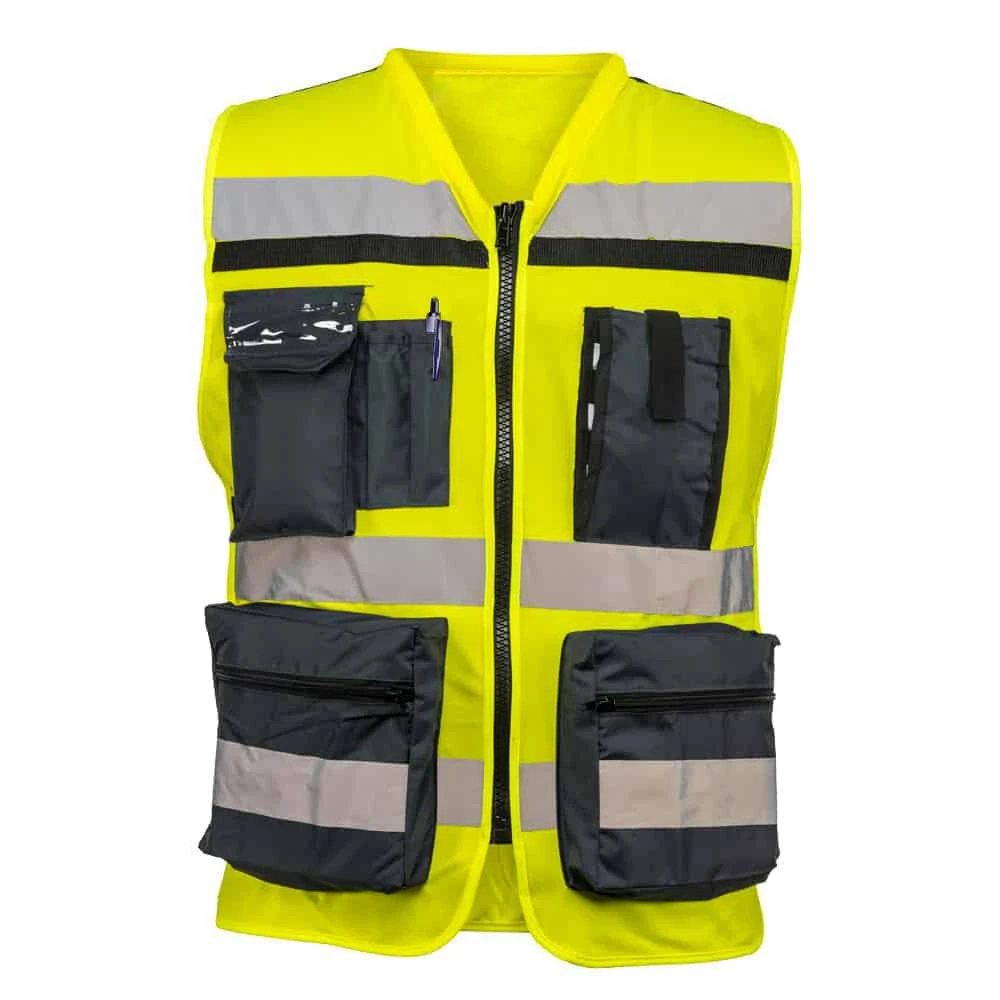
Both softshell options sit alongside woven-shell constructions in the confirmed product range — such as the DM112 (55% polyester / 45% cotton) and the DM116 (55% nylon / 45% cotton beaver nylon blends) — which offer a different durability and weight profile suited to heavier site environments.
2. Reflective Tape: Printed vs. Sewn
Reflective tape is the primary visibility element of any hi-vis jacket. The attachment method and tape quality directly affect performance after repeated washing, abrasion, and UV exposure.
- Printed reflective tapes (DM120, DM112): Confirmed for both the DM120 softshell jacket and the DM112 woven-shell jacket. Designed for enhanced visibility in logistics, infrastructure, and field maintenance operations where consistent marking across a fleet of garments matters.
- Buyer action: Verify with the supplier whether the tape meets the retroreflectivity thresholds required by the applicable safety standard for your region before committing to bulk order. Certified test data is not included in the confirmed materials for this article.
3. Matching Construction to the Work Environment
No single jacket fits every application. The table below maps confirmed product descriptions to operational environments:
| Work Environment | Garment Construction | Confirmed Product |
|---|---|---|
| Logistics / warehouse | Softshell, printed reflective tapes | DM120 |
| Infrastructure & field maintenance | Softshell or woven-shell, printed reflective tapes | DM120 or DM112 |
| Construction / heavy outdoor | Woven beaver nylon blend | DM112 or DM116 |
| Corporate safety uniform / bulk industrial | Softshell, high-performance fabric | DM121 |
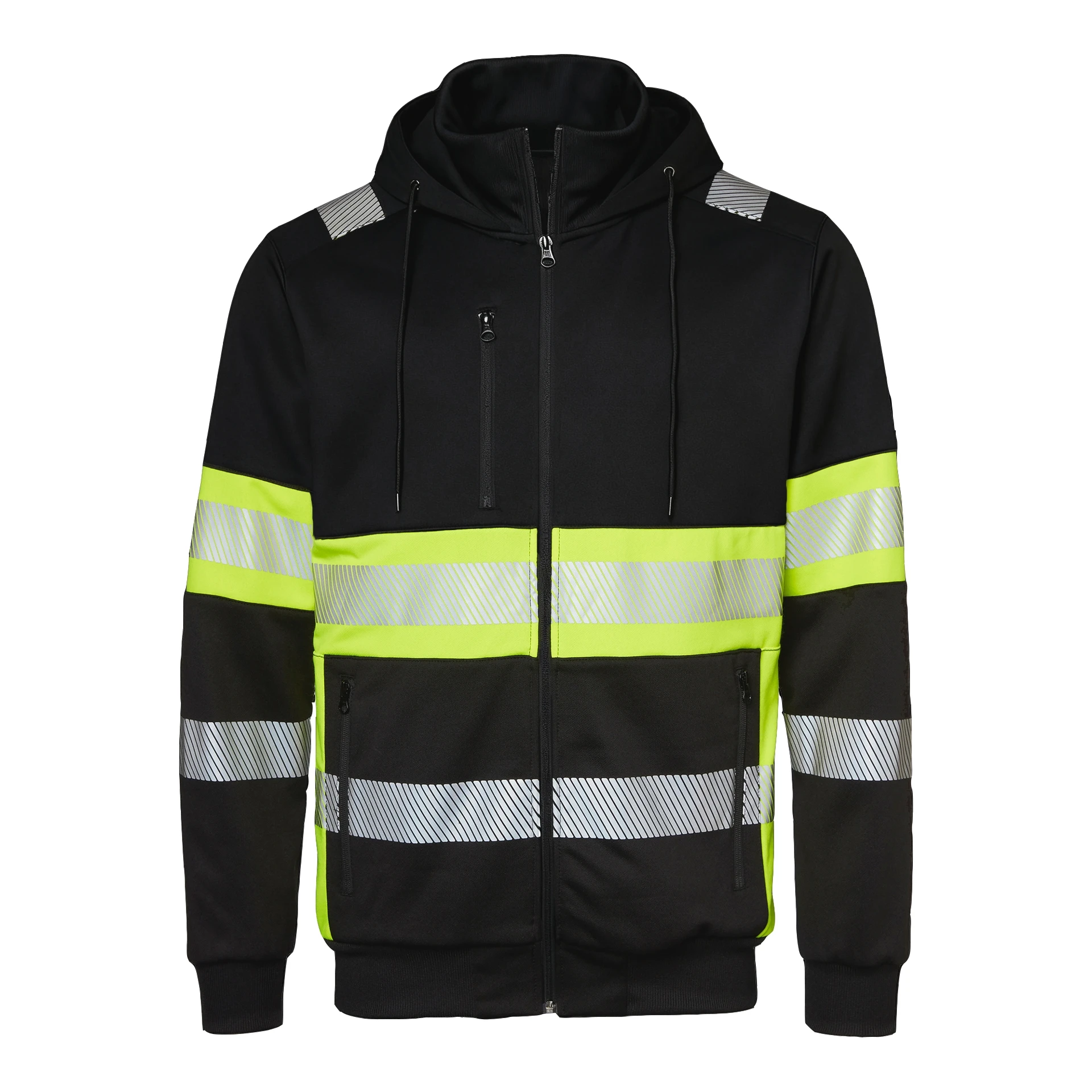
| Temperate industrial environments | Knit brushed | DM114 HIGH VISIBILITY HOODY |
| Warm weather / indoor compliance | Lightweight jersey | DM119 HIGH VISIBILITY T-SHIRT |
This table is an editorial synthesis based on confirmed product descriptions and is not a certified application chart.
4. Layering System Considerations
Safety compliance is often managed as a layering system rather than a single garment choice. The confirmed product range from Shijiazhuang Dellee Ming Garments Co., Ltd. spans jackets, hoodies, and T-shirts, allowing procurement teams to specify a consistent visibility standard across multiple garment types within a single supplier relationship.
For sites operating across seasons, a softshell jacket (DM120 or DM121) can anchor a system that includes the DM114 hoody as a mid-layer and the DM119 T-shirt for warm-weather or indoor compliance.
5. Softshell vs. Woven Shell: A Direct Comparison
When the decision comes down to construction type:
- Softshell (DM120, DM121): Prioritizes flexibility, comfort, and stretch. Better suited to roles requiring sustained movement. Confirmed fabric type: softshell.
- Woven shell — nylon/cotton blend (DM112, DM116): Prioritizes abrasion resistance and structure. Confirmed for construction, site logistics, and infrastructure maintenance.
- Knit brushed (DM114): Internal warmth option for temperate environments. Not designed as an outer shell.
Driving factors: the physical demands of the role, the climate of the deployment region, and any layering requirements specified by the site safety officer.
Specification Check Summary
Before placing a bulk order, procurement teams should confirm the following directly with Shijiazhuang Dellee Ming Garments Co., Ltd.:
- Fabric weight and performance ratings — wind/water resistance and stretch percentage for the target deployment climate.
- Reflective tape width, placement, and wash durability — verify that printed reflective tapes meet the retroreflectivity standard in the target market.
- Size range and fit grading — confirm available sizes cover your workforce.
- Customization options — logo printing, color variants, and tape layout modifications for the order volume.
- MOQ and lead time
Note: Prices, delivery schedules, and certification test reports are not included in the confirmed product materials for this article. Request these documents directly from the supplier before finalizing procurement.
Conclusion
A high visibility softshell jacket suits environments where flexibility, comfort, and consistent reflective marking matter most — particularly logistics operations, infrastructure maintenance, and field service teams. The DM120 is the softshell option with printed reflective tapes; the DM121 addresses corporate and bulk industrial scenarios. For heavier site use, the woven-shell jackets (DM112, DM116) remain the alternative. Match the construction to the application, verify tape specifications for your regional safety standard, and confirm MOQ and customization scope directly with the manufacturer.
THE PEOPLE

About the author
THE COMPANY
Shijiazhuang Dellee Ming Garments Co., Ltd.
DELLEE MING GARMENTS CO.,LTD was founded in the north part of China. We always keep to our principle "Excellent Quality, Reputation, Perfect Service, Sincere Cooperation", Our products are well sold in Europe, America, Australia, Middle East and Asian.
About Us ↗Visit company website ↗YOUR NEXT STEP
Bring your brief. Start a useful conversation.
Use case, specification, quantity and delivery window: make the next conversation specific.
Post time: Oct . 28, 2026 03:46